Space-Time Response
The essay "Space-Time Response" was developed as a response to a question JJ Johnson forwarded to me in 2009 from an individual URANTIA Book student who posed in a URANTIA reader’s group forum the following: “If that is true [light particles have weight Cf. 15:6.13 (173.11)] wouldn't the "bending of light" which "confirmed" so-called 'space-time curvature' have just as well been confirmation of Newtonian gravity? (The light from distant suns (stars) bent by the gravity pull of our Sun).”
My response delves into the relationship between modern scientific theories, particularly those of Einstein and Newton, and the cosmological insights presented in The URANTIA Book. I begin by responding to the question about the bending of light and whether it confirms space-time curvature or Newtonian gravity. The questioner appears to argue that while Einstein did not refute Newtonian gravity, his theory of relativity provides a more comprehensive framework that includes the concept of space-time curvature, which complements rather than contradicts Newtonian mechanics.
Throughout the essay, I explore the notion that The URANTIA Book offers an expansive view that can integrate various scientific and spiritual insights. The discussion extends to the role of the Almighty Supreme, a concept from The URANTIA Book that I believe is crucial for understanding the cosmos. The essay posits that as science continues to unlock new mysteries, an integrated cosmos-view that includes the spiritual dimensions described in The URANTIA Book will become increasingly necessary.
I discuss the contributions of other thinkers, such as Alfred North Whitehead and Charles Hartshorne, whose process philosophy and theology echo some of the revelatory concepts found in The URANTIA Book. They suggest that integrating these philosophical insights with modern scientific discoveries, particularly in quantum and plasma physics, can provide a more comprehensive understanding of the universe. The essay emphasizes the need for a larger, more descriptive universe framework to accommodate emerging scientific knowledge. Whitehead and Hartshorne are stepping stones to the expansive cosmology of the revelation.
One significant aspect of the essay is the discussion of Immanuel Velikovsky's theories on electromagnetic forces in the universe, which were largely dismissed by Einstein. The response highlights the ongoing relevance of Velikovsky's ideas, particularly in light of recent advancements in plasma physics, which support the concept of an "Electric Universe." This notion challenges the gravity-centric view of celestial mechanics and suggests a more significant role for electrical forces in shaping the cosmos. Again, there is much scaffolding in the revelation that leads to this as a valid concept to investigate.
The essay also touches on the importance of synthesizing science and religion to create a harmonious understanding of the universe. I cite passages from The URANTIA Book that advocate for a rational synthesis of scientific and religious perspectives, proposing that such an approach can bridge the apparent gaps between these fields. This synthesis, they argue, is essential for achieving a coherent and satisfying understanding of the universe and our place within it.
In conclusion, "Space-Time Response" presents a thought-provoking examination of the intersections between scientific theories and some cosmic and spiritual insights from The URANTIA Book. I advocate for an integrated approach that incorporates both scientific rigor and spiritual wisdom, suggesting that this holistic perspective is necessary for advancing our understanding of the cosmos and addressing the complexities of modern scientific discoveries.
This particular version of my response of so long ago has been updated with current conventional use of the URANTIA Book references, a few grammar edits, and references where they seemed to be needed. I expect to update this in a forthcoming essay; I can't say how much will need to be amended, but certainly will be added with discoveries and my progressive growth in connecting the revelation’s dots.
JJ, et. al.,
I promised a short email regarding some thoughts I have been working with regarding the subject in an email you sent to me, Dick Bain, and Dr. Matt Niebaur on May 6, 2009 with a subject of “space-time.” I mentioned I was working on a Powerpoint to connect some dots for myself regarding quantum mechanics/theory and how the authors of The URANTIA Book either support or change the context by which we might approach these difficult subjects.
The email was forwarded from an undisclosed sender who posed a question: “If that is true [light particles have weight p173:3 15:6.8 ] wouldn't the "bending of light" which "confirmed" so-called 'space-time curvature' have just as well been confirmation of Newtonian gravity? (The light from distant suns (stars) bent by the gravity pull of our Sun).
The following material has been stitched together over a month or so because my schedule has been extremely hectic and full. My daughter Ash’Leigh and two nieces graduated college all in the space of a couple of weeks. We made pilgrimages to Pennsylvania (Bryn Mawr) and Baltimore (UMBC) as well as accommodating a gaggle of folks staying at the house. Nevertheless, I’ve been thinking about the extensions of this particular subject for some time now, and is one of the primary the reasons I have continued to pursue deeper understandings of the cosmology in The URANTIA Book. Some of the following material will form the basis of my next paper on the Supreme.
As you know, I’ve been developing a series of essays on the Supreme Being. The first two came across in rather rapid fashion and this latest one has gotten off-track, at least with developing the next theme. Recently, I’ve been considering that both the micro and macro cosmos has to be integrated into an overall rubric to adequately discuss the Almighty Supreme. The question in the email got me thinking again. And usually a question like this draws one to the natural sciences, but with a URANTIA Book perspective, one is provided a truly expansive view to work with, so that’s the approach take in the following pages.
From what I can tell, very little has been written as a secondary (human) outcropping regarding the component of the Supreme Being called the Almighty Supreme. I believe the Almighty Supreme, as one of the four constituents of the completed Supreme Being, presents a significant revelatory component that will engage our minds for many centuries to come. As science unlocks the various mysteries that now delay scientific and spiritual progress, further conundrums will surface that need an integrated cosmos-view. There is no question in my mind the Urantia Book provides this context, and while we aren’t taught a whole lot about the Almighty Supreme, the overall mosaic portrayed in The URANTIA Book with regard to this aspect is still a lot to chew on.
My primary theme with the following text will discuss not only what the context The URANTIA Book sets related to the Almighty Supreme, but how this context may be playing out. So, some speculation is in accord and I will readily provide some for the reader.
Human Thinking, Human Insights, Revealed Insights
The question raised in the email seems to imply that Einstein’s curvature of space idea negates Newton’s deterministic math. Einstein didn’t refute Newtonian Gravity, in fact, he supported the math; it works for large-scale computations, those in our objective world. What he did was present a relativistic picture of space-time as gravity distorting the “fabric of space” as a curvature of space (see the graphical rendition below, fig. 1) which he pictured as four-dimensional, with time as some kind of a fourth “dimension.”
Einstein is generally considered the pinnacle of human thinking, and his insights about both space and time (which he called space-time) have been accepted as gospel among the scientific community and humanity in general. Granted, there have been many others such as Max Planck, Niels Bohr, Lise Meintner, Otto Hahn, Louis de Broglie, Max Born, Werner Heisenberg, Erwin Schroedinger, Paul Dirac, John Von Neumann, and Henri Poincare`, but it is Einstein who is revered as almost a lone genius; his general and special relativity has withstood the test of time, but if we analyze the cosmological picture in The URANTIA Book, one should come up with at least some questions about the veracity of his claims. A bit further on in this response I introduce Immanuel Velikovsky who lost the arguments with Einstein much like Tesla did to Edison, but truth has a way of getting loose it seems.
What got me interested in this physics topic (I once studied Physics as a Math major) oddly enough, was the insight Matthew Block provided that Charles Hartshorne was the human source the revelators used for presenting the seven levels of perfection on page 3 of the Foreword. I feel this revelator inclusion of human thinking so early in the papers is a significant revelation about human thought in and of itself. Thus, I feel compelled to research this more thoroughly from multiple aspects as opposed to merely accepting the fact the revelators integrated Hartshorne’s thinking into the overall revelation. The fact of the inclusion leads to further insights into the revelation itself.
The path led back from Hartshorne to other scholars, most not well-known. Hartshorne was a student of Alfred North Whitehead and developed process theology out of Whitehead’s process philosophy. It appears that Whitehead was intrigued and informed by the dilemmas arising out of quantum physics experiments, so he came up with a philosophical picture of what may be going on. In the meantime, much of his work ventured into the religious. Based on his process-oriented philosophy, he discussed a God that had “two poles,” one in the finite and one as infinite. Not many understood what he was talking about at that time (early 20th century) but further developments in quantum and plasma physics use Whitehead as a conceptual foundation. Just imagine what progress would be made using The URANTIA Book as a guide.
I’ve had a number of conversations with David Kantor regarding the idea that the cosmology of The URANTIA Book overlaps conceptually with Whitehead’s ideas that the origin of everything other than Deity is “process.” If the revelators felt that Hartshorne’s human ideas of these seven levels were correct enough to put the table in the Foreword, then I wanted to know more about Hartshorne and what led him to this thinking. Research pointed directly to Whitehead and further back to Charles Sanders Peirce, but it was Whitehead that seemed the one who created a true paradigm change. He writes from a philosophical perch and incorporates both science and religion in unconventional ways.
Whitehead believed in the fundamental unity of the world. He arrived at that due to the scientific understanding of the continuous interaction of its constituents, and he postulated that matter and mind were simply different aspects of the one reality. Whitehead felt this was due to the fact that mind is part of the bodily interaction with the world. He thought that every particle is an event having both an "objective" aspect of matter and a "subjective" aspect of experience. Some material compounds, such as the brain, create the illusion that we call "self". But the mental is not exclusive to humans, it is ubiquitous in nature. There is much about Whitehead that can be supported in many of the papers throughout The URANTIA Book yet to date, Whitehead is NOT an apparent textual source the revelators used for modification and insertion. What stands out is the context of Whitehead’s thesis. It is as though the revelators made Whitehead understandable. I find near zero probability that anyone will find Whitehead as a human “source” the revelators appropriated.
Nevertheless, Whitehead and Hartshorne are still far away from the depth and complexity of deity relations found throughout The URANTIA Book, but the human conceptual paths for those non-Urantia Book readers that pre-echo the apparent revelatory concepts are the ones I am interested in. Together Whitehead and Hartshorne integrate science and religion in ways that no philosophy or religion outside of process philosophy/theology has attempted. And what I am finding today with the advent of plasma physics and its attendant concepts, is that science will require a larger, more descriptive universe framework to keep emerging knowledge “grounded.”
This context is playing out today in of all places, the movies. There has been a recent spate of marketing hype for Dan Brown’s book-to-movie “Angels and Demons.” It portrays how the Catholic Church (religion) and the scientific community (science) have had a seriously antagonistic relationship. The time frames span from the Middle Ages to present day. The issues have morphed, but the relationship is still one of natural adversaries.
But the theme of the book and movie is one of hope -- the hope that there can be a reconciliation of the two perspectives. My sense is that the spiritual perspective of the cosmos presented all through The URANTIA Book provides the connective grounding that will allow rationality to rule. After all, as the Melchizedek of Nebadon tells us in paper 101, “While religion is not the product of the rationalistic speculations of a material cosmology, it is, nonetheless, the creation of a wholly rational insight which originates in man`s mind-experience. Religion is born neither of mystic meditations nor of isolated contemplations, albeit it is ever more or less mysterious and always indefinable and inexplicable in terms of purely intellectual reason and philosophic logic.”
The Melchizedek goes on to say more related to this subject in the section he calls the fact of religion, intimating that to be revealing and effective, revelation must create a harmony of both mind and spirit by rationally synthesizing the “apparent” gaps between science and religion.
p1105:5 101:2.1 The fact of religion consists wholly in the religious experience of rational and average human beings. And this is the only sense in which religion can ever be regarded as scientific or even psychological. The proof that revelation is revelation is this same fact of human experience: the fact that revelation does synthesize the apparently divergent sciences of nature and the theology of religion into a consistent and logical universe philosophy, a co-ordinated and unbroken explanation of both science and religion, thus creating a harmony of mind and satisfaction of spirit which answers in human experience those questionings of the mortal mind which craves to know how the Infinite works out his will and plans in matter, with minds, and on spirit. (my bolding)
It's not so much that TUB has shown us NEW science as that it has shown us the CORRECT science for understanding certain events.
The Electronic Universe
Typically, universities and colleges separate the natural sciences into physics, astronomy, biology, chemistry, earth science, and various cross disciplines such as environmental science and complex system informatics to mention just two. A serious student of The URANTIA Book is faced with the challenge of incorporating at least some of the natural sciences into his or her study to gain an appreciation of the enormously complex cosmology the book presents. For many it can be overwhelming, for others challenging. For all it is certainly thought provoking.
By definition cosmology is the study of the Universe in its totality, and by extension, humanity's place in it. A Melchizedek cautions URANTIA Book readers that the cosmology in the papers “is destined to be outgrown in a very short time” (p1109:2 101:4.1). At this time, it is hard to believe that statements regarding the physical sciences will stand in need of revision in consequence of additional scientific developments and new discoveries, but this is what the revelators have told us, so we are left with speculating what a “very short time” may actually mean.
By all accounts, it appears science is “catching up” to what is found in The URANTIA Book in many domains of human interest, especially with regard to cosmology. I point to Dr. Phil Calabrese’s essay “The Coming Scientific Validation of the Urantia Book” as an excellent treatment of this subject, and Halbert Katzen’s eminent website project UBtheNews that is analyzing and codifying new discoveries and scientific advancements that have been increasingly substantiating, and catching up to, the richly detailed historic and scientific information that is contained in The URANTIA Book. During this epoch in time, it is hard to believe the cosmology in the papers will be outgrown any time soon, if at all.
One of the areas touched upon only lightly in secondary works is the emerging evidence that the Universe is structured predominantly as an electronic organism. Specifically, the writings of Mighty Messengers and Melchizedeks support this hypothesis. It is an unconventional context that is clearly taught in the cosmology developed throughout The URANTIA Book.
The idea of an electronic Universe is not exactly new. However, it is a relatively modern or contemporary discipline of science. It is more commonly known now as plasma physics. Even though plasma (a fourth state of matter) was discovered in the late 19th century, the first widespread dissemination of this idea arose from an individual scholar named Immanuel Velikovsky. He was a contemporary of Einstein’s and strongly objected to what he felt was a myopic gravitational view Einstein was able to ingrain on 20th century society. Velikovsky’s claim of the participation of electromagnetic fields and their interrelations in the structure of the universe was opposed by Einstein almost to the last, and this was the issue of a dispute that is chronicled by Velikovsky through letters he and Einstein exchanged over a decade.
Be it known that Velikovsky was considered a charlatan and quack scientist for most of his adult life as a professor at Princeton. He was the target of abuse and calumny. It was from this New Jersey location that both men worked in the later years of their lives as professors, had numerous dialogues, and graduated to the mansion worlds. Einstein never agreed with Velikovsky about the electric primacy of the solar system, but he was a cordial professional during their disagreements.
I won’t go into the details of the exchanges, but I will say something of Velikovsky’s theories as they are relative to the subject and the coming validation of not only The URANTIA Book, but Velikovsky’s conjectures.
Dr. Velikovsky’s research led him to an understanding that at the time of the Hebrew Exodus an enormous natural catastrophe took place—an understanding that brought him to a realization that the ancient history of the Near East needed synchronization, and natural history required a reconstruction. He spent several years during the 1940’s in libraries reading and writing. Two manuscripts, Worlds in Collision (1950) and Ages in Chaos (1952), resulted from this labor. Einstein told him he would have great difficulty finding a publisher. It turned out he was right, and Veliskovsky had to go to a nascent book publisher - Doubleday - and later Dell, to finally get his materials to a wider population. I still have the yellowing and disintegrating small paperbacks.
The URANTIA Book compared to Velikovsky’s works is like comparing a study of the Milky Way to the moon. Nevertheless, the objective of understanding the syncretism of human thought as accumulated in the papers and seen through the lens of a mind like Velikovsky is noteworthy. Velikovsky is one of those “clues” that once found, needs to be followed. Velokovsky, like Whitehead, has caused a paradigm shift and together they are supported by the cosmology presented in The URANTIA Book.
As an aside, I was reading some of the amazon.com reviews about Worlds in Collision and came across a poignant closing to a reviewer’s comments. The words of the Melchizedek I quoted from paper 101 on page 3 above are spot-on it would seem:
“… [the] book has a deeply personal connotation for me. I shall share this with you. I live in a "traditional" tribal Islamic society, characterised by repression and compulsion as far as beliefs and expression are concerned. Here, if by the age of seven a kid doesn't start parrotising [sic] and doing the numerous and laborious prescribed Islamic rituals, then according to the doctrine his guardians are duty bound to see to it that he starts - even if this means using physical punishments, coercion or threats.... and a lot of kids are terrorised that God will "cause the roof to fall in on them" or they will be visited at night by monsters that will gobble them up if they don't learn their so-called prayers.... It was similar treatment by my late father and teachers that made me hate Islam as a kid. And my own intelligence told me that it was nothing but a bunch of silly, backward legends for which I was being tortured. You can imagine then the secret joy, consolation and the resulting inner strength I felt when I came across "Worlds in Collision" that "X-rayed" and explained these silly legends and revealed rationally the true nature of this frightening religious horror to me. Of course, I didn't argue about this publicly with my "elders" then, because I would have been beaten up for "blasphemy".... “
I want to emphasize that I did not choose this particular response to highlight the dogmatic behaviors of the particular faith the viewer mentions, for you could substitute virtually any religion in place of the term ‘Islam’ and still evoke the truth contained in this reviewer’s message. The point is emphasized that the pursuit of universe beauty results in the creation of a harmonious mind coupled with a satisfaction of spirit. It is clear the entire 20th century has been a progression to synthesize the apparently divergent sciences of nature and the theology of religion into a consistent and logical universe philosophy.
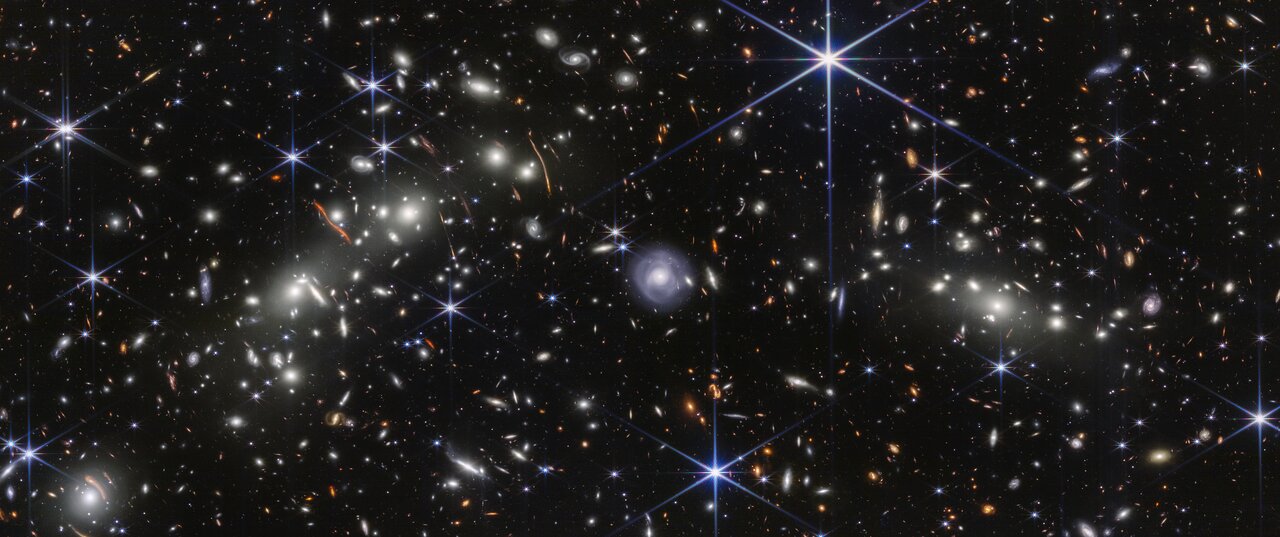
Now let’s venture back to the electric universe; I leave Velikovsky to fast forward to the present. There are more frequent and unexpected discoveries in all areas of science happening today, but none are as spectacular as the ones that paradoxically connect astronomy with quantum mechanics. The stunning photos from Hubble are enough to give shivers up one’s spine, or stand the hair on the back of one’s neck straight up.
This has been true for the last three decades, but the logarithmic ascent of discovery (and theories) is getting steeper. The new discoveries accent a sign that something is wrong at the level of conventional assumptions about science’s understanding of the universe, and specifically the solar system. Two of the most far-reaching discoveries of the past century came as great surprises: 1) the pervasive role of charged particles in the universe; and 2) the signature of planetary catastrophe throughout our solar system. The "big picture" of space has changed.
With the assumption that gravity is the only force that can give birth to stars and planets, or produce celestial motion, astronomers ignored the extremely powerful electric force. It is a fatal mistake; the credibility of science is at stake. From the smallest particle to the largest galactic formation, a web of electrical circuitry connects and unifies all of nature, organizing galaxies, energizing stars, giving birth to planets and, on earth, controlling weather and animating biological organisms. There are no isolated islands in an "electric universe."
There is a wide range of revelators throughout The URANTIA Book who relate their subject to the electric component. For example:
- A Life Carrier tells us in his discussion about implanting life on Urantia that they would be permitted to institute new patterns of mechanical, chemical, and electrical mobilization at the time of their subsequent arrival with life transplantation and implantation mandates (P661:2, 57:8.8).
- A Perfector of Wisdom advises the student that local gravity (or linear) “pertains” to the electrical stage of energy or matter. This would infer that local gravity is subsequent to electricity, which means when “suitable materialization” of matter exists, local gravity instantiates, or better yet, eventuates. The stages occur sequentially and they are in the sequence of force 🡪 energy 🡪 power. It is only when power is transformed from emergent energy that energy-matter in the form of ultimatons responds to linear or local gravity, pure energy and its ancestor “force,” do not. This array of terms is used by both a Divine Counselor and a Perfector of Wisdom and it is only power that is used to define the energy-matter stage that is mobilized by the Universe Power Directors and their associates (p125:6 11:8.3; P9:7, 0:6.5, 6, 7).
- A Mighty Messenger on duty in Nebadon and by the request of Gabriel, writes in paper 42 that when 100 ultimatons condense or congregate into an electron, then and only then does the electronic stage of power occur (p476:6 42:6.4).
There are many other examples, but the overall thrust, the overall gestalt one gets from readings of papers 41 Physical Aspects Of The Local Universe and 42 Energy -- Mind And Matter is there is an enormous yet very organized attenuation (segment, organize, or assemble in unit formation) of living, nonspiritual energy from the Unqualified Absolute to a finite local universe like Nebadon. This attenuation is described as having distinct limits when it reaches the Grand Universe outside of Havona. Finiteness has limits on both scales, the macro and the micro.
The Hubble project has observed, documented, and measured a network of magnetic fields. Since magnetic fields are produced only by electricity, these complex structures are evidence that plasma is carrying electrical energy across galactic and intergalactic space, powering secondary systems, including galaxies, stars, and planets. The potential effect electricity has on universe matter is 1039 times greater than gravity. Roger Penrose has written in Shadows of the Mind (1994) that the gravitational force between the electron and the proton in a hydrogen atom has been calculated to be in a ratio of:
1/28500000000000000000000000000000000000000
Thus, the electric forces are a thousand billion, billion, billion, billion times more powerful than gravity on the constituents that make up matter. Contrary to popular belief nature does not rely on the trivially weak force of gravity to do the “really big jobs” in the cosmos.
The gravitational model must rely on invisible matter arbitrarily placed wherever it is needed to make its models "work." An unanswered question from the gravitational model asks why do cosmic bodies spin. Plasma experiments show that rotation is a natural function of interacting currents in plasma. While this may be the beginning of the answer, we may find more in the context provide in The URANTIA Book which describes four motions of space: 1) Primary motion—space respiration, the motion of space itself, 2) Secondary motion—the alternate directional swings of the successive space levels, 3) Relative motions—relative in the sense that they are not evaluated with Paradise as a base point. Primary and secondary motions are absolute, motion in relation to unmoving Paradise, and 4) Compensatory or correlating movement designed to co-ordinate all other motions. This context will eventually put the big bang in the unmarked grave of discarded theories.
One final thought related to Velikovsky. One of the definitions of a paradox is a statement that appears as though it cannot be true and yet somehow seems as though it must be true. Velikovsky introduced a number of paradoxes for which the scientific community to this day has not accorded him any respect. Unless a paradox comes out of an experiment, a theory that contains paradoxical material is anathema to current paradigms and is generally shunned, or at the least ignored. But experimenting and calculating within the context of a particular paradigm is fraught with risk of further concretizing the error. It can approach evil.
For example, the fact that geocentric theory accurately coincided with the observed planetary positions was the main argument for the Ptolemaic system and against the heliocentric system. For more than two generations, until 1600, it was not the Roman Church who opposed the Copernican theory; scientists opposed it and used as their main argument their ability to predict planetary positions, conjunctions, and eclipses. According to Wikipedia, Copernicus' system was not experimentally better than Ptolemy's model. Copernicus was aware of this and was unable to present any observational "proof" in his manuscript, relying instead on arguments about what would be a more complete and elegant system.
For hundreds of years, astronomers accurately predicted eclipses based on the Ptolemaic system. But the question arises as to how they could achieve this degree of accuracy with the sun revolving on one of the orbs around the earth? Very simply, astronomers and mathematicians made continuous adjustments of their observations to their theories and their theories to observations.
What finally disproves the “inaccurate” paradigm and system of observations/calculations is expanding the philosophical, intellectual, and observable context. Galileo provided the initial expansion. Galileo's observation of the phases of Venus produced the first evidence that Copernicus' theory was correct. His study of the moons of Jupiter proved that the solar system contained bodies that did not orbit Earth.
The point here is about expanded context, expanding worldviews, and identifying and resolving paradoxes. There are many authors in The URANTIA Book who add paradox; the papers are not the inspired (and they tell us so) word of God. So, let’s look for some paradoxes related to our subject.
Atomic Paradoxes
In the opening paragraph of paper 116, The Almighty Supreme, a Mighty Messenger alludes to the paradox theodicy refers to, namely the existence of evil in light of a God that is all good, perfect, and omnipotent. Theodicy is a paradox of immense proportions for all religions, the likes of which harbingers schizophrenic dogma, like original sin found in the Catholic canon or atonement in the Protestant liturgy.
The resolving context the Mighty Messenger offers in his (or her?) opening salvo is directed at telling us that if we only realize that the God of time and space – The Supreme – is evolving and experiencing the cosmos right along with us then our religious perspective would have fewer “profound religious paradoxes.” It is God and man in association in ways that we will someday understand more fully. The context of the cosmology of the Almighty Supreme as a living and evolving Deity of power (energy-matter) and personality has been provided by which our rational senses can and will attain a level of satisfaction that will help coordinate science and religion through the truths of reality.
The classical approximation works well in many situations. But it is unable in principle to account adequately for the observed macroscopic behaviors of large physical systems whose macroscopic behaviors depend sensitively upon the behaviors of their atomic constituents. To comprehend the macroscopic behaviors of large systems of this kind one must, in general, use quantum theory. A good example is the sun. Today’s analysis of the sun is focusing on the atomic and sub-atomic elements of the orb. An Archangel in collaboration with the Chief of Nebadon Power Centers writes in paper 41, Physical Aspects Of The Local Universe, that a “gaseous stone surface” of calcium exists six thousand miles thick on the surface. While the aspect of calcium riding on light beams is not a new thought (notice the Archangel deftly supports this out of the box theory) the expanded fact-statement about a 6000-mile calcium surface is not. Is this another one of the paradox-inducing clues Halbert chides us to go follow?
The emergence of quantum mechanics initially created paradox in opposition to classical science. Classical (a.k.a. Newtonian) science approaches perceptual objects as primary. As long as we can process an object with at least one of the body’s senses, it can be observed and measured via classical physics. This prescribes an objective world; correlated with this, it also determines certainties. Thus, complex expressions of relatedness are completely “subjective.” Of consequence, since the Newtonian framework implies a deterministic universe, it is unable to develop a unified coherence of physical systems. This is exemplified by the Cartesian duality split of mind and body. It is exemplified by Descartes’ famous saying “cogito ergo sum.” (I think therefore I am).
This duality, this separation, is an error that is as obtuse as much as the atonement concept. Well, maybe not that much, but pretty close! For example, determinism treats entities as externally related which creates an underlying belief that systems have little need for an overall systemic ecology. Working from a closed world view of perceptual objects classical science encourages the dismissal of such relationship-centric notions as love and forgiveness as connected to reality.
Quantum mechanics provides a mortar and pestle for science that has yet to be ground into a well understood compound. The evolution can be summarized by four events: 1) In 1896 radioactivity was discovered and led Physicists to believe that the atom was not indivisible, that it had its own structure; 2) In 1900 Max Planck invented Quantum Theory by positing that energy can only be transmitted in discrete "quanta"; and 3) In 1905 Albert Einstein published "The Special Theory of Relativity"; and 4) In 1911 Ernest Rutherford showed how the atom is made of a nucleus and orbiting electrons. Quantum mechanics describes a set of principles underlying what has been experimentally observed at the sub-atomic level.
Atoms, or elements, are known as the building blocks of the physical world. The periodic table describes about 100 different elements (there are more that have been found to be highly unstable), and is usually taught in the later high school years. An element is a substance that cannot be broken down into simpler substances through ordinary chemistry--it is not destroyed by acids, for example, nor changed by electricity, light, or heat.
Atoms combine to create compounds, the level of the universe by which we usually perceive matter. The periodic table presents the known elements such as chlorine and sodium, which of course can combine to create common material salt. Hydrogen and Oxygen combine to create water (and where is the ‘wetness’ in the elements?). That said, the quantum world is where perception and knowledge of the world as we can classically understand it, presents nothing but mystery.
One of the mysteries - and it is a primary principle in the quantum world - is the paradox of both a dual wave-like and particle-like behavior of the rudiments that make up the atom. This aspect alone renders prediction of events in the atomic world uncertain. This and other dilemmas have yet to be understood fully.
This microscopic world is difficult to imagine even its apparent infinite smallness, let alone the structure leading to our perception of matter. For example, science has calculated the atom’s mass to be less than 10-27 of the entire atomic structure. Also, atoms are filled with a web of events. Inside an atom are trillions of virtual pairs of photon and gluon force carriers. At root, the world is a realm of events (action), not substances, the latter being an effect of our macroscopic human senses giving rise to a world view of perceptual objects.
It is my belief that the spiritual concepts the papers instruct with respect to the Almighty Supreme, while relatively broad, do provide the Petri dish that we can use to begin to unravel and explain the strange paradoxes that science has abundantly released.
Quantum Weirdness – Hints of the Ultimate?
A Mighty Messenger in paper 118, Supreme And Ultimate -- Time And Space, tells us that “Space is apparently absolutely ultimate.” Again, without a reading of the entire suite of papers this statement would mean nearly absolutely nothing! In the case of one who has completed at least a one-time pass, it still means nearly nothing! But what this statement should do is expand the context while it introduces paradox. We know that the term “ultimate” has to do with transcending time, but not space. This endears a number of questions that can begin to analyze the paradox, expand our knowledge, and maybe understanding of the Almighty one bit better.
The quantum world brings this to our consciousness. A testable property of the quantum world is that a physical system, once separated, retains a "connectedness" through the quantum wave function. This is, perhaps, the most bizarre and controversial of the predictions of quantum mechanics since it implies linkages that transcend space, time, and the conventional interactions of the four basic force fields: electronic, magnetic, weak, and strong.
To draw an analogy, a body of water is made up of countless drops or molecules of H2O, yet none of them is inherently separate from one another. In fact, a conscious, intentional act has to occur to actually separate a molecule from a larger body of water. And further, an electric current has to be passed through the H2O molecule to separate the elements into discrete units.
When Alain Aspect measured the property of one member of a physically entangled quantum system (calcium ions), the other member instantaneously responded defying the accepted cosmic speed limit, the velocity of light. One quantum particle always reacts to what the other is doing even if an arbitrarily large distance separates them.
This “non-local” nature of an entangled quantum system led Physicist David Bohm to suggest a bold interpretation of quantum physics. According to Bohm, quantum physics indicates that behind our physical reality everything in this universe is interconnected at a fundamental level by an “unbroken wholeness” or an “implicate order” involving consciousness, the antithesis of Descartes’ cogito. Although Bohm’s idea of the connection between quantum physics and consciousness is far from being universally accepted, some very illustrious contemporary physicists share this view. The URANTIA Book supports this interconnectedness where a Divine Counselor tells us:
p30:6 1:6.7 To assume that the universe can be known, that it is intelligible, is to assume that the universe is mind made and personality managed. Man's mind can only perceive the mind phenomena of other minds, be they human or superhuman. If man's personality can experience the universe, there is a divine mind and an actual personality somewhere concealed in that universe.
It becomes self-evidently clear as one reads the entire revelation that the universe is friendly to mortal will creatures evolving in and evolving the Supreme. The composite ideas elevated throughout the papers are the notions of absolute unity and cosmic harmony. But what is missing in even Bohm’s bold expansion is the concept of “personality” as is revealed throughout The URANTIA Book.
Shedding Light on the Subject
Light however, a definite quantum element when understood as a photon, may just be the most paradoxical of all the quantum issues; at a minimum, it highlights the conundrums that the quantum world exhibits. While light is one of the most fundamental phenomena studied in physics and astronomy, the phenomenon of physical light is portrayed by the various revelators in The URANTIA Book with a frequency that borders on the ubiquitous. If one is counting the term, it appears 420 times.
The behavior of and interactions between light and matter are predicted by Einstein's special theory of relativity and by the logical extensions of quantum theory. Through this theory, Einstein describes the phenomena associated with observing a mechanical universe in which the speed of light is a constant for all observers.
At a minimum, the Midwayer Commission, editors of part IV of The URANTIA Book do take a moderating view on relativity. In a discussion on the vulnerability of materialism, near the end of the book, they address the theory of relativity, humankind's most impressive monument to its greatness, as—“dabblings with the faintly glimpsed findings of relativity.” (P2078:8, 195:7.5). This clue is delivered in of all places the Jesus papers!
Phil Calabrese has written on this. “The Urantia Book seems to affirm Einstein’s second law [that the speed of light will be the same value when measured in either of two reference frames that are moving with constant velocity with respect to one another]. The URANTIA Book affirms the famous equation E = mc2 proved by Einstein in a second short paper in 1905: “The increase of mass in matter is equal to the increase of energy divided by the square of the velocity of light.” [Page-474 Line-1] But it does not follow Einstein’s “principle of relativity”, which holds that there is no fixed reference frame. Instead, The URANTIA Book affirms that there is such a fixed reference frame. The Urantia Book points to a “focus of space” that is not in space but located at the limiting surface of the relatively non-moving midspace zones existing between the zones of matter-pervaded space. These midspace zones converge on a non-moving non-spatial location, which can be taken as the fixed frame of reference for the universe. Even the motion of space can be measured relative to this fixed reference frame.”
Nevertheless, relativity and quantum theory are regarded as two mutually incompatible theories, which deal with different areas. Relativity deals with large-scale phenomena and quantum theory with small-scale, or micro-phenomena. Paradoxically, quantum theory deals with wholes and relativity deals with parts. Actually, it could not be otherwise, because the micro-world of quantum physics is the level at which only wholes exist.
Parts & Wholes
I’ve been fascinated with the concept which arises from the question of what is a part and what constitutes a whole. A soap bubble exhibits the idea of holism with regard to both form and function. Its spherical shape emerges spontaneously by the parallel action of surface tension acting at all points in and on the shell simultaneously. It is hard to picture all the parts of a bubble individually, but it is virtually impossible to imagine the parts operating independently once the bubble takes form. I think this is the same with the Supreme.
In paper 117, a Mighty Messenger discusses God the Supreme as the finite Deity who is dependent on the total acts of each personality. You don’t get any larger than this except for the paradox of the part and whole with respect to brotherhood (P138:3, 12:7.8).
p1284:1 117:4.5 Any isolated action of the personal parts of the finite is comparatively irrelevant to the eventual appearance of the Supreme Whole, but the whole is nonetheless dependent on the total acts of the manifold parts. The personality of the individual mortal is insignificant in the face of the total of Supremacy, but the personality of each human being represents an irreplaceable meaning-value in the finite; personality, having once been expressed, never again finds identical expression except in the continuing existence of that living personality
In another context, via the lessons of a Mighty Messenger on duty in Nebadon in paper 42, The URANTIA Book presents explicit detail about a number of effects related to parts and wholes at the atomic level. He emphatically supports the proposition for which Max Planck won the Nobel prize for in 1925 -- the “quantum of action.” This is a difficult concept to grasp, because it is counterintuitive to so many classical physical ideas. It poses some interesting concepts about how the Absolute (Universal Absolute?) works in the Universes however. For one, it provides the unit of measure that corrects the error or delta of classical science with what is actually going on in the atomic world, the quantum world. It also posits that action is the most basic of all elements in the known finite universe.
The difference between quantum mechanics and classical mechanics is specified by a value called Planck’s constant, which is a tiny number on the scale of human actions. This tweaking of laws of physics would seem to be merely a bit of mathematical minutia that could scarcely have any great bearing on the fundamental nature of the universe, or of our role within it. Plank’s constant replaced numbers by actions and upset the whole apple cart. It produced a seismic shift in the nature of reality, and of ourselves. The world of substances is converted to a world of information and actions, and our conscious thoughts become engaged in ways unimaginable in the mechanical framework of classical physics.
The Mighty Messenger also expands upon the basics of this idea with a little-known ratio: the proportion created by the wavelength of the light emitted by an electron falling into a new atomic orbit to the diameter of the orbit into which it falls. The number that Niels Bohr calculated was determined to be hc/e2, where c is the velocity of light, e is the charge of the electron, and h is the result of multiplying Planck's quantum of action by two Π (pi).
The relevant paragraph from The URANTIA Book is found in paper 42. In the first sentence, the book states that a quantum of energy is something which is uniform in magnitude regardless of the frequency or wavelength at which the energy appears when the electro or other atomic particles take a “quantum leap” from one orbit to another.
p474:4 42:4.14 The quantity of energy taken in or given out when electronic or other positions are shifted is always a "quantum" or some multiple thereof, but the vibratory or wavelike behavior of such units of energy is wholly determined by the dimensions of the material structures concerned. Such wavelike energy ripples are 860 times the diameters of the ultimatons, electrons, atoms, or other units thus performing. The never-ending confusion attending the observation of the wave mechanics of quantum behavior is due to the superimposition of energy waves: Two crests can combine to make a double-height crest, while a crest and a trough may combine, thus producing mutual cancellation.
Given our current scientific understanding, this can only be true if the term energy used in this part of the book refers to the physical property which physicists call action. Innumerable experiments confirm that, while many physical effects are quantized in specific circumstances, the only physical property which is quantized in uniform parts, regardless of the specific circumstance, is the property of action.
Action comes only in wholes. What does that mean? It means the same as with a human action or decision; you cannot jump out of bed 1.4 times or decide to get married 3.9 times. Of all the things that science deals with, things that can be cut up in pieces, measured, weighed, located, there is one "no thing" that cannot be located, measured, weighed, cannot even be seen without being annihilated, a no thing that is not in space or time. That is action.
Intention
The basic vocabulary of science is the measure formulas of physics, which reduce everything to mass, length, and time. Clearly, it would be too simple to identify intention with any combination of those three parameters. Of the six measure formulas containing all three, however, one was promising, and that was the formula for action, ML2/T. Other formulas, such as those for energy and force, are well recognized in science, but action, particularly action at a distance, while recognized, has always been one of its greatest enigmas. We can understand or at least accept as plausible the fact that when a moving body collides with a body at rest, the motion of the first is transferred to the second; in that case there is the mass to carry the energy. But light, the carrier of action, has no rest mass; it conveys energy and leaves no residue. Like the arrow in the symbolism of the archer, it acts to reach a distant goal.
The importance of action emerged when Max Planck discovered that action comes in wholes. That was the discovery that led to quantum theory, a major revolution in physics. These wholes are photons (light), or quanta of action. The unit of action, the product of energy times time, is always the same. The energy may be very small, or it might be very large, but the associated time, which for the photon is its period, is inversely proportional to the energy. It is very short for a photon of high energy, roughly 10-22 seconds for a photon with enough energy to create a proton, and proportionally long for a very low-energy photon, roughly 1/10 second for a wavelength close to the circumference of the earth.
Why should light come in wholes? The atomic theory, first enunciated by Democritus, stated that matter comes in wholes, which he called atoms, meaning indivisible units. But it turned out that what he called atoms could be divided or reduced to protons and electrons. These, the only known permanent material particles, are in one respect more deserving of the name atoms because they are more fundamental than what we call atoms (hydrogen, oxygen, carbon, etc.). Atoms are the smallest units into which matter can be divided and still keep its identity. Protons and electrons have no identity, and are not truly separate; they are linked by an enormous force, 1039 times gravity that is linked somehow to the mesotron.
While protons and electrons are more fundamental than atoms, they are still a duality, or more correctly a quadruplicity, because their creation involves antiparticles, antiproton and positron, in which the charges are reversed.
Did I say their creation? Yes, and the fact that they are created implies what is yet more fundamental: that which creates them. As it turns out, that is known to be the quantum of action. Material particles created from action, from pure action! Incredible, yet there it is, a finding from material science. If that isn't a surprise ending to the "whodunit" of science, I don't know what is. As Urantia Book readers, we should have a potential source to begin exploring this mystery since we’ve been told of a whole cacophony of personalities that get involved in this creation.
Urantia Contextual Light
You know, I started this response almost a month ago and I seem to have been like the energizer bunny, I just kept going and going. Sometimes it made sense to me that I just should go off into another topic, and sometimes I wasn’t exactly sure why I chose a particular path. I’m not sure if that’s a result of my type of personality, or the revelator’s inscrutable way of ultimately linking everything in The URANTIA Book’s pages together. Paradoxically, it seems like a maze that is totally connected and makes you feel that you know where you are going, but you really don’t! I remember Bill Sadler, Jr. using the metaphor of a “looking glass.” I think I finally found out what he meant.
Initially my thinking began with the question that raised the issues of gravity, light, Newtonian and Einsteinian physics, so I’ll end with a short discussion about light, Urantian light, which in many cases is speculative. Here’s some final thoughts.
Just as the geocentric worldview evolved to one that was heliocentric, by evaluating the conundrums and paradoxes of quantum mechanics we can postulate that modern science now has a transformed world view. The following list provides a few of these transformations.
- From materialism to an ecological or process-relational perspective
- From determinism (God doesn’t play with dice) to uncertainty
- From dualisms to “duality without dualism”
- From modernism to constructive postmodern perspectives
- From mere matter to event metaphysics
- From atoms to the cosmos to cosmic-atoms
- From gravitational-centric to electric-gravitational.
Now add to these contextual insights that can be derived from reading The URANTIA Book and I think we might hypothesize about the following evolutions from the above list:
- From process-relational to God the Sevenfold
- From uncertainty to certainty of progress and growth
- From duality without dualism to triunity of perspective
- From constructive postmodern perspectives to global endeavors
- From event metaphysics to epochal revelation
- From cosmic-atoms to energy-mind-matter
- From electric-gravitational to power-personality
The papers teach that the Almighty Supreme is the undeveloped, but evolving nonspiritual aspect of the Supreme that will conjoin someday in the far distant future to anneal with the spirit-personality aspect God the Supreme, and Supreme mind to unify into one experiential Deity. In effect, we will have a power base (the Almighty) spirit directed and conscious as a truly organic personality. This conjoining is told to us that it will happen when each and every personality and planet has achieved what is referred to as “light and life.” I don’t think the revelators chose the term “light” lightly.
This nonspiritual aspect of the Supreme and eventually of the Supreme Being, is the domain of science, but has a distinct part/whole interaction with personality and mind that is goal driven to become spiritual. That implies The Supreme is becoming a Being. In other words, the Almighty Supreme can’t stand completely alone as a part of the whole, but it is centered on the physical, material plane that science reaches its hand into. The Almighty Supreme provides the framework for duality without dualism, in fact, it more appropriately presents a cosmic framework that exhibits a functional triunity – mind, matter, and spirit.
A surprising paragraph in Paper 42 reveals that energy can assume countless manifestations in the various universes but is always conserved -- P472:12, 42:4.2. In effect it says that even the Mighty Messengers don’t fully comprehend how energy can take upon different aspects in the various universes, can wander from universe to universe, undergo transmutations of time, but always come back to its ultimate source, the Infinite Personality who sent it forth. This supports the conservation of energy in a big way!
Arthur Young has written that the atom, once thought to be indivisible, has now been divided. But human psyches seem to want to get to an “end.” For now, the prevailing belief is that the quantum of action cannot be divided. Young calls it the true atom – not an atom of matter, but an atom of activity. This appears to be correct. As mentioned above, Max Planck proposed that the conflict between classical theory and quantum observation would be resolved if one assumed that the physical property we call action, or angular momentum, were available in the universe in a smallest discrete unit, which he called a quantum. I discussed above this is supported by a Mighty Messenger in The URANTIA Book.
Dan Massey has written that by the second quarter of the twentieth century the notions of quantum theory, electrodynamics, thermodynamics, and special relativity had been combined into a synthesis called quantum electrodynamics, or QED for short. This theory was formulated and named in 1929 to correct Maxwell’s theory of electricity and magnetism. But it took until 1948 for Julian Schwinger and Sin-Itiro Tomonaga to experimentally calculate Paul Dirac’s theory regarding the “magnetic moment” of the electron. This theory and the experimental number have been put through the wringer and there is no significant difference between experiment and theory. So, while not explaining many of these paradoxes, QED has been tested experimentally to the highest precision of all the theories of physics, and has never been found to deviate from expected results. Thus, according to Richard Feynman, QED describes all of the phenomena of the physical world except the gravitational effect and radioactive phenomena which involve nuclei that shift their energy levels.
There is no doubt that science is quite perplexed with regard to light. QED can predict very reliably what will happen with, for example, reflection off glass. However, science has no idea why individual photons do what they do. It is almost as if an individual photon had a mind of its own, and it was able to look at the collective group behavior and adjust its own individual actions. (Maybe a study of bees or ants will help here?)
What I contend, is a clearer concept of some very important context changers will lead science in the right direction. Relative to this particular issue, an Archangel in collaboration with the Chief of Nebadon Power Centers has provided some interesting information regarding achieving “a clearer concept of the interaction and interrelationship of the various space-forces and solar energies operating in the space regions of Nebadon” assisting this research. One must believe there are Power Centers and get a grasp on just what might be going on here first. Some Velikovsky-like theories have to be made I would venture. The theory would also have to explore where Nebadon may be located in relation to the Milky Way. We’ve been given some hard facts and some remarkable clues in the papers.
Included with the more mundane science-oriented facts, we are provided a context that includes knowledge about the personal and nonpersonal control of the master universe—the presences, the performances, and the co-ordination of the Conjoint Actor and the Unqualified Absolute.
To put this tome all together, into a concluding thought is too difficult, so I’ll leave that to the reader. I report, you decide.
Peace,
Bob
// Bob Debold 1st draft July 14-2009, 2025Updated 8/12/2025. -